As the fourth-largest city in Luxembourg, Dudelange is characterized by a relatively young population, distinct and diverse neighborhoods, and significant urban development projects that are both ambitious and innovative, such as the Neischmelz site. The city is also notable for the strong attachment of its residents to their living environment and local community. While Dudelange has engaged for more than thirty years in initiatives aimed at involving citizens in municipal life, it reached a decisive milestone over the last two legislative periods by adopting a clear political ambition: to become a pioneering municipality in participatory democracy by offering modes of participation tailored to citizens’ expectations and needs.
It is in this context that, on December 9, 2020, the PLDP of the University of Luxembourg and the City of Dudelange signed a collaboration agreement aimed at supporting the municipality in its development as a “pilot city” for participatory democracy. After five years of rich and constructive exchanges, this collaboration concluded in December 2025. It enabled the establishment and consolidation of three participatory mechanisms, which have since fully taken off.
The Citizens’ Council (Biergerrot)
Composed of 15 to 20 residents of Dudelange randomly selected from the municipal population register, the Biergerrot is a deliberative process focused on potential improvements to the services and/or policies of the municipality. Participants are selected to ensure socio-demographic representativeness in terms of nationality, age, and gender.
A working session is held in person, in the evening on a weekday, and lasts approximately 1.5 to 2 hours. Participants are given a specific issue, on which they are briefed by experts during the first part of the session. Then, with the support of external facilitators, citizens organize themselves into small groups and develop proposals for the issue at hand.
A report summarizing the issues discussed and the solutions proposed is then drafted. This report is submitted to participants for review before being sent to the municipal council (collège échevinal), which decides on the follow-up for the various topics. The actions retained by the council are communicated within one month to all members of the working group and other stakeholders (citizens, municipal services, etc.) through Dudelange’s usual communication channels.
The Citizens’ Panel is a group of volunteer citizens invited at regular intervals to respond to a questionnaire (online or on paper) and give their opinion on an issue the municipality wishes to gauge public sentiment about. Panel members are recruited through public calls.
Before receiving the questionnaire, panel members are provided with a clear and accessible information dossier on the specific topic, determined by the municipal council on the recommendation of municipal services according to current events. The results of the panel are then shared with all its members and other stakeholders (citizens, municipal services) via Dudelange’s usual communication channels.
These results are subsequently taken into account by policymakers in their decision-making for the city. The panel can also be linked to the Biergerrot, for example, to test the acceptability of proposals formulated in the council.
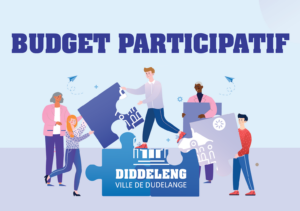
In 2022, the City of Dudelange launched its first participatory budget, becoming the first municipality in Luxembourg to adopt this direct democracy tool. Through this mechanism, residents can propose and vote—online or on paper—on concrete projects with a total allocation of €100,000 from the city’s investment budget. This amount, set by the municipal council, can be revised upwards if necessary.
The second edition was launched in 2024, reflecting the city’s desire to continue and strengthen its commitment to citizen participation. Several other Luxembourgish municipalities, such as Bertrange, Mamer, Differdange, Roeser, Strassen, and Erpeldange, have since followed this example and implemented their own participatory budgets.
Significantly, as part of the institutionalization of its participatory mechanisms and on the advice of the PLDP, Dudelange became the first Luxembourgish municipality to create an administrative service entirely dedicated to designing, organizing, and monitoring participatory processes.
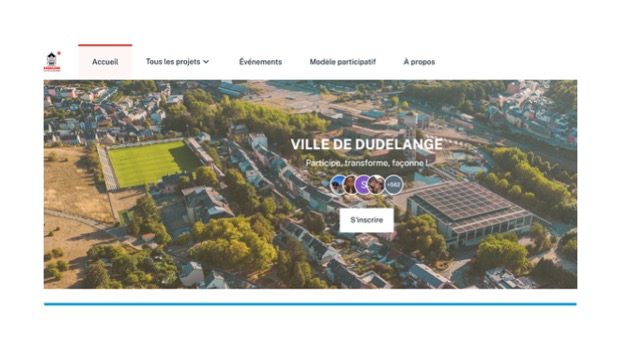
As part of its strategic efforts, the municipality centralized citizen participation initiatives and created a dedicated online showcase through the platform jeparticipe.dudelange.lu.
To celebrate the achievements of the collaboration agreement, the PLDP and the City of Dudelange organized a closing conference that brought together representatives from Luxembourgish municipalities (Roeser, Esch-sur-Alzette, Boulaide, Leudelange, and Ettelbruck) as well as cities from neighboring countries (Mons and Auderghem in Belgium, Thionville and Nancy in France, Trier in Germany). The meeting presented and discussed recently implemented citizen participation initiatives, attended by Luxembourgish municipal staff, local and national elected officials, and civil society actors.
This conference also marked the unveiling of a practical guide addressing key questions for municipalities wishing to implement participatory processes. Jointly drafted by the PLDP and Dudelange’s Participatory Democracy Service, the guide aims to record the lessons learned and successes of the collaboration for long-term use.
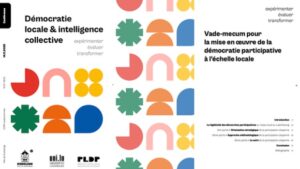
Additionally, various communication materials were produced and disseminated throughout the collaboration, which also attracted media attention on several occasions.